
in which it all goes wrong
on pancakes, failure, and some extra titbits from my kitchen

Firstly, a disclaimer: I am not a chef. Nor am I a historian. But I love food, and I’m passionate about history. My aim in writing this substack isn’t to lecture you, more to take you along on my journey of discovery through cooking old recipes at home, hopefully learning something (and eating some delicious food) along the way. All of which is to say that I am not an expert, and so, sometimes, things Go Wrong. And this week’s recipe for pancakes was, unfortunately, a complete flop (forgive the pun!) With historic recipes, there can be a few different reasons for this:
The recipe is wrong. I think that deep down this is what we would all like to believe is the case when a dish turns out badly. Those people back in history, they just didn’t know how to cook properly! Their dishes were probably really basic! This is not the case. Sure, cookbook writers in the past didn’t have a whole team of food scientists and home economists testing out their recipes and measuring the nutritional values but that doesn’t automatically make them unreliable. When I’m trying to figure out what went wrong, this is the least likely reason - with the caveat that with handwritten recipe books, there is slightly more risk that someone made a mistake or copied a recipe down wrong.
You cooked it wrong. Let’s face it, this is probably the reason you messed up. Historic recipes often have a certain vagueness about cooking times, measurements, and so forth (for more on this, see my post on poached pears) so trial and error may be called for… and the key word here is error. Sometimes you just have to keep trying until you get it right.
Your palate is wrong. Over the years, tastes change. It’s always possible that you’ve cooked something right, but you just don’t like it. Spices, cooking techniques and flavours go in and out of vogue (if you’re not a fan of mace, then step away from the 18th century puddings!) Recipes like a Yorkshire Giblet Pie (‘Whilst the blood of your goose is warm, put in a tea cupful of groats…) may not sound tantalising to the modern chef - but don’t let that put you off. The proof of the pudding is in the eating, literally, so it’s always worth giving something a try.
You don’t have the skills to pay the bills. It’s a truism to say that the more society becomes mechanised and technological, the more skills we lose as humans. But it’s certainly the case that bodies of knowledge are constantly coming and going throughout time, whether that’s our prehistoric ancestors’ acute sense of smell that supposedly vanished when they started domesticating dogs, or the intimate knowledge of the currents and landings of the river that was lost, along with the boatmen, when bridges were built over the Thames. We can see this effect in microcosm in the kitchen; as more tools and gadgets are introduced, some of the skills and specialisms are lost. Chefs in the past were able to conjure up staggeringly lavish banquets using what we would consider pretty basic tools, that we would struggle to replicate today.
And so, on to the Recipe That Went Wrong. I wanted to try out something for Pancake Day, and was rather taken by this one from Hannah Glasse’s Art of Cookery (1747), mainly because of the name, ‘A fourth sort, [of pancake], call’d, A quire of paper.’
How could I resist? This is her recipe in full:
Take a pint of cream, six eggs, three spoonfuls of fine flour, three of sack, one of orange-flower water, a little sugar, and half a nutmeg grated, half a pound of melted butter almost cold; mingle all well together, and butter the pan for the first pancake; let them run as thin as possible; when they are just coloured they are enough: and so do with all the fine pancakes.
As you can see, this is quite different to a modern pancake recipe, mainly because of the exorbitant amounts of cream, butter and eggs. I suppose if you’re about to start your Lenten fast, you might as well go out in style.
Here is my version of the recipe below. This is just for information; as it didn’t really work for me, I’m not suggesting you replicate it!
Ingredients
500ml double cream
6 eggs
3 tbsp plain flour
3 tbsp sweet sherry (this is instead of sack, which was a type of sweet wine)
1 tbsp orange flower water (I used this one, though essence would probably give you a stronger flavour)
1 tbsp caster sugar
1 tsp freshly grated nutmeg
220g butter
Method
Save 1 tsp butter on the side (this is for cooking your first pancake). Dice the rest of the butter and melt it gently, either in a pan over a low heat or in a microwave (checking and stirring every 10 seconds.)
Put the butter to one side to cool, so that it doesn’t cook the eggs when you mix them together. Don’t let it get so cold that it returns to a solid, though.
Mix together the eggs, cream, flour, sherry, orange flower water, sugar and nutmeg to form a batter, adding the cooled butter last. Get rid of any lumps of flour by whisking gently (not fast or you’ll thicken the cream!) Alternatively, you could mix the flour into a paste with a little of the orange flower water or sherry, before adding to the rest of the ingredients.
Melt your remaining knob of butter in a frying pan (non-stick is best). When this is hot, add a little batter and swirl around the pan to form a thin pancake. Brown lightly on both sides, then put on a plate on a piece of kitchen towel to absorb any spare butter. Continue making the pancakes until all the batter is used up. You won’t need to add any more butter in the pan as it will come out of the batter when you cook it. Layer the cooked pancakes between layers of kitchen towel if you don’t want them to stick together.
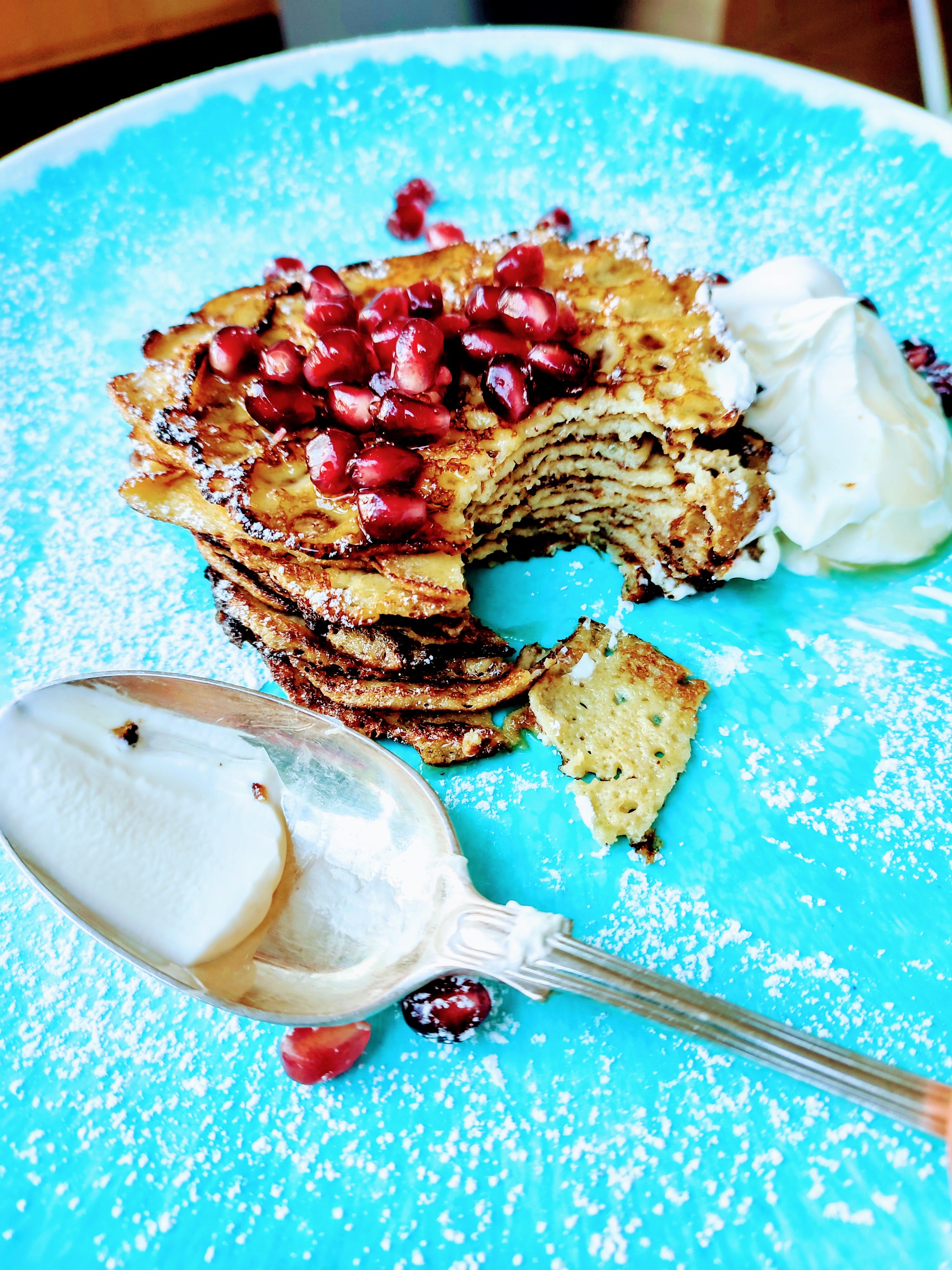
Now, for the problems I had with this recipe. The mixture makes a distressingly grainy batter, which is actually nothing to worry about, as when you’re cooking, the little grains of butter melt again in the pan and give the pancakes a fine lacy texture, a bit like you might find in buckwheat galettes. The main issue I had was with turning the pancakes over - they were too thin to flip and too friable to take kindly to being pushed around with a fish slice. I found that in order to cook them enough not to instantly fall to pieces when I turned them, they needed to be considerably browner than ‘just coloured’. In the end I gave up and made miniature pancakes instead of full-size ones.
The second issue was with the flavour, which was not fantastic. Perfectly edible, especially with some toppings added, but compared to crepes they had a slightly off-putting hint of egginess, rather like a sweet omelette (yes, these are a thing, comment if you’d like me to try one for a future post!) The nutmeg was also problematic, as the sheer amount of it added an overpoweringly peppery note to the flavour which wasn’t entirely to my liking. Nutmeg was a very popular spice during this period and you’ll find it in most sweet dishes but it feels a bit much here - perhaps if I’d put more sugar in the batter it might have balanced it out better.
I might try this one again in future to see if I can make it better - any hints or suggestions for improvements welcome!
Titbits
Further dispatches from my kitchen


New book! From the brilliant Stephen’s Bookshop in Monmouth. Can’t wait to try me some high class cookin’ (though I can’t help but feel that this claim is slightly undermined by the advert for ketchup on the first page…)
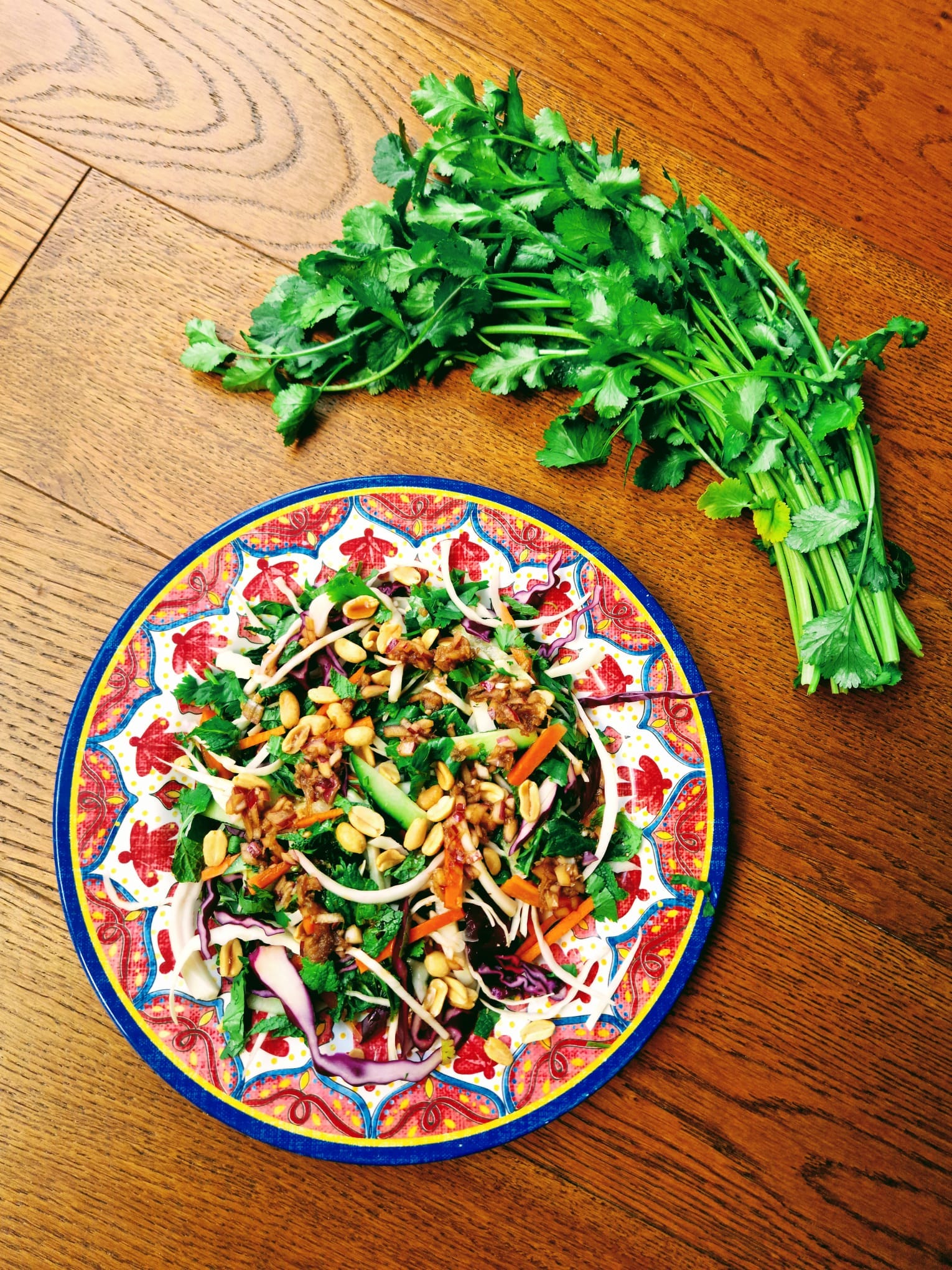
The best winter salad - shredded carrot, red & white cabbage, cucumber, mint and coriander, topped with salted peanuts and this dressing from Gwyneth Paltrow (I know, I know, but seriously, don’t knock it till you’ve tried it. Oh, and use slightly less fish sauce than she says.)
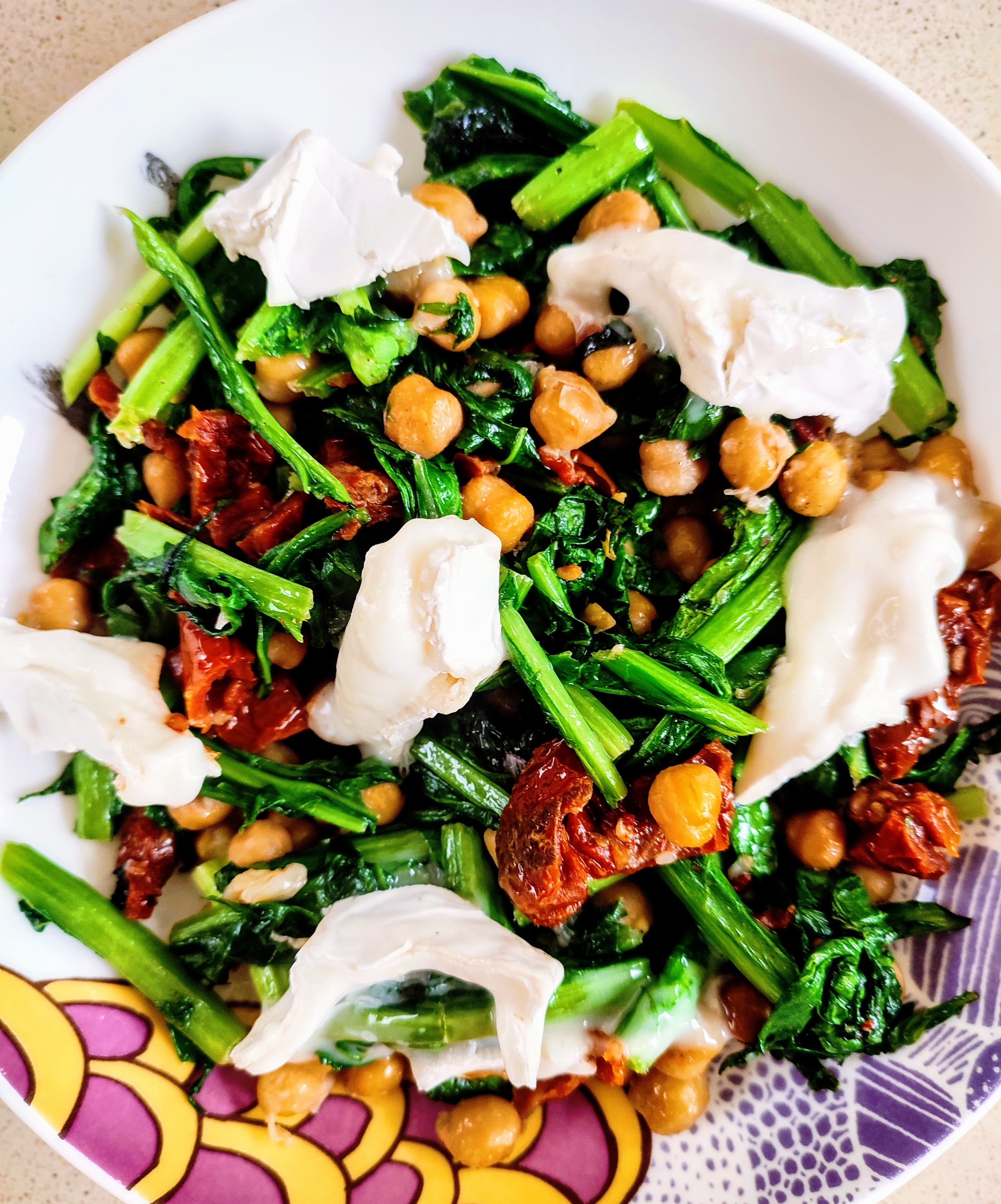
Quick tasty lunch - chickpeas fried up with garlic, mustard greens and sundried tomatoes, topped with goats’ cheese and this dressing which is one of my favourites.
I hope you enjoyed this week’s post! Any questions please ask, I love comments.
I can't believe that a recipe with that much cream could taste bad but yes eggy nutmeg pancakes don't float my boat either. Maybe try a smaller batch next time? 200ml cream, one egg, 1 tbsp flour, zero nutmeg, 2tbsp sugar? I think a bit of artistic license with the ratios is in order!